UNIST site map
- Admissions
-
Academics
- Colleges and Schools
-
Academic Affairs
- Academic Calendar
- Academic Curriculum
- Requirements for Graduation
- Browse Open Courses
- Undergraduate Administration
-
Graduate Academic Affairs
- Tuition Fee Payment
- Academic Leave of Absence/ Academic Return
- Voluntary Withdrawal/ Expulsion
- Change of Major
- Change of Degree Program/ Dropping of Degree Program
- Class Period/ Attendance Period/ Academic Year・Semester
- Course Registration
- Course Drop
- Attendance/ Grade/ Exam
- Credit Transfer/ Credit Carryover
- Academic Forms
- Education Support
-
Research/Industry
- Research Aims
- Research Findings
- Researcher Search
-
Research Organizations
- UNIST Multi-Interdisciplinary Institute
- IBS Research Groups
-
UNIST Labs
- Department of Mechanical Engineering
- School of Energy and Chemical Engineering
- Department of Civil
- Department of Materials Science and Engineering
- Department of Nuclear Engineering
- Department of Industrial Engineering
- Department of Design
- Department of Biomedical Engineering
- Department of Biological Sciences
- Department of Electrical Engineering
- Department of Computer Science and Engineering
- Department of Mathematical Sciences
- Department of Chemistry
- Department of Physics
- School of Business Administration
- Graduate School of Carbon Neutrality
- Graduate School of Artificial Intelligence
- Research Support
- University-Industry Relations
- Campus Life
- News Center
- About UNIST
-
etc
- UNIST Bulletin
- Work-Life Balance Support System
- UNIST Gender Equality Plan
- Faculty Invitation for Tenure Track
- Faculty Invitation for Non-Tenure Track
- Board Meeting Minutes
- University Council Meeting Minutes
- Administrative Service Charter
- Privacy Policy
- Copyright Policy
- Rejection of Unauthorized Email Collection
- Operation and Management Policy for Video Information Processing Devices
- Information Disclosure
SEARCH


Connection Points of Knowledge, Everything About UNIST
Try searching.
Recommended search terms


STUDENT


- portal
- U Academics Innovation Center
- Leadership Center
- Dormitory
- Academic Information Center
- International Students Support
- Browse Open Courses
- Course Registration
- Graduation Requirements for Graduation
- Academic Leave of Absence/ Academic Return
- Military Service
- Certificate Issuance
- Academic Calendar
- Scholarships
- Campus Map
- Campus Life Guidebook
- Health Care Center
- Human Rights Center
- portal
- Job Opening
- Announcement for Bid
- UNIST AI Services
- UNIST Daycare Center
- Sports Center
- UI Downloads
- Announcement
- Recruitment of Professors (Non-tenure)
- Faculty Invitation for Tenure Track
- UNIST Academic Information Center
- Office of Research Facilities and Training
- Office of Research Affairs
- Rule Management System
- Academic Calendar


This is a collection of menus necessary for UNIST students .
students
- portal
- U Academics Innovation Center
- Leadership Center
- Dormitory
- Academic Information Center
- International Students Support
- Browse Open Courses
- Course Registration
- Graduation Requirements for Graduation
- Academic Leave of Absence/ Academic Return
- Military Service
- Certificate Issuance
- Academic Calendar
- Scholarships
- Campus Map
- Campus Life Guidebook
- Health Care Center
- Human Rights Center


This is a collection of menus necessary for prospective UNIST Students .
prospective Students


This is a collection of menus necessary for UNIST Faculty & Staff .
Faculty & Staff
- portal
- Job Opening
- Announcement for Bid
- UNIST AI Services
- UNIST Daycare Center
- Sports Center
- UI Downloads
- Announcement
- Recruitment of Professors (Non-tenure)
- Faculty Invitation for Tenure Track
- UNIST Academic Information Center
- Office of Research Facilities and Training
- Office of Research Affairs
- Rule Management System
- Academic Calendar


NEWS CENTER
Discover not only Research Findings and event news, but also the diverse facets of UNIST presented by reporters and writers.
News Center

UNIST News
총 970건의 게시물이 있습니다.
There are a total of 970 posts.
-
Research
AI-Driven Satellite Detects Methane—84 Times More Potent Than CO2—Faster and More PreciseTheir findings were published in npj Climate and Atmospheric Science on March 25, 2026.Abstract Methane (CH4) is a dominant driver of near-term warming, yet global emission monitoring remains constrained by slow processing and large uncertainties. Hyperspectral spectrometers enable sensitive detection of CH4 plumes, but the relative advantages of enhancement-based (ENH) and radiance-based (RAD) approaches have not been systematically evaluated. Here we introduce a dual-path deep-learning framework that systematically compares both approaches using globally distributed, expert-validated CH4 plume datasets from EMIT and Tanager-1. The ENH models exhibit higher segmentation accuracy across plume scales, whereas the RAD models, operating directly on 49 shortwave-infrared channels, avoid computationally expensive preprocessing (eg, matched filtering) and enable rapid screening. Both pathways markedly reduce labor-intensive workflows and latency relative to traditional processing while maintaining competitive performance by utilizing deep learning. Explainable AI analyzes demonstrate that the models learn spatial-spectral features consistent with CH4 absorption structure and plume morphology, providing evidence of scientific validity. Cross-sensor evaluation demonstrates architectural robustness across EMIT and Tanager-1, establishing a physics-grounded framework adaptable across hyperspectral sensors. Methane (CH4) is a powerful greenhouse gas—84 times more potent than carbon dioxide over 20 years. Quickly identifying leaks is crucial, but current methods rely on slow, manual analysis of satellite images. Researchers at UNIST have created an AI-based system that automates methane plume detection, making monitoring faster and more precise. Led by Professor Jungho Im from the Department of Civil, Urban, Earth, and Environmental Engineering, the team built a deep learning model to identify methane leaks in satellite imagery. They tested different data types and modeling techniques to determine the most effective approach for global deployment. Hyperspectral satellites capture reflected sunlight across hundreds of narrow wavelengths, revealing detailed surface information. The team trained their models on data from NASA's EMIT satellite, which orbits the International Space Station. The models detect methane by recognizing specific infrared wavelengths absorbed by the gas—clear indicators of leaks. The system successfully identified methane emissions from diverse sources, including oil and gas facilities, waste sites, and coal mines across regions such as Turkmenistan, Algeria, and the US The analysis revealed that the AI system does not merely recognize visual patterns; It interprets physical signals such as absorption features and plume shapes consistent with real-world physics. They tested three deep learning architectures—CNN-ASPP, Inception U-Net, and SegFormer—using two data types: raw radiance and processed data that highlights methane concentration. Models trained on the enhanced data performed better overall. But models trained on raw data responded faster, making them useful for quick scans. Applying these models to Tanager-1 satellite data—commercial hyperspectral imagery—yield similar results, demonstrating the approach's versatility across different sensors. First authors Seyoung Yang and Yejin Kim played key roles in this work. The models work across various resolutions and conditions, relying on physical principles to quickly flag large leaks for further investigation. Professor Im emphasized the importance, “Fast leak detection is essential for reducing methane emissions. Traditional methods are slow and require experts. By combining hyperspectral data with AI, we can identify potential trouble spots in real time and strengthen global monitoring efforts.” Supported by the Ministry of Environment and the Ministry of Education, this research was published in npj Climate and Atmospheric Science on March 25, 2026. Journal Reference Seyoung Yang, Yejin Kim, Minki Choo, et al ., “Beyond localized methane plume detection: a dual-path deep learning framework for sensor-agnostic global hyperspectral methane plume monitoring,” npj Clim. Atmos. Sci., (2026).- 2026-06-01
- JooHyeon Heo
- 38
-
Research
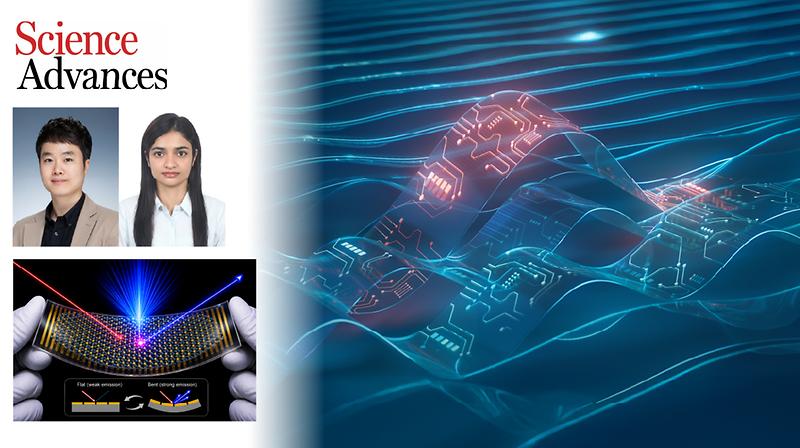
Matter That Responds: From Materials to Active SystemsFrom regenerative scaffolds to bend-sensitive photonics, UNIST researchers are designing matter that senses, adapts, repairs, and performs.《Editor's Note: Across fields ranging from biomedical engineering and organic electronics to photonics, chemistry, and quantum materials, UNIST researchers are rethinking the role of matter itself. Their latest work—rebuilding damaged tissue, making light respond to water and strain, reopening therapeutic pathways for drug-resistant cancer, and engineering sensors that read subtle human signals—points to a new frontier in science: materials are no longer passive building blocks. They are becoming active systems designed to respond. 》 Matter that Heals Healing is no longer only a biological process. It is increasingly becoming a matter of design. In one study, UNIST researchers developed a blood-derived fibrin scaffold that helps regenerate muscle tissue and blood vessels together, offering a promising route for treating severe muscle injuries and volumetric tissue loss. The work shows how patient-derived materials can be engineered to guide the body's own repair mechanisms, creating a more integrated path toward tissue reconstruction. Another team approached healing from a different scale: the molecular defense systems that cancer cells use to survive. By identifying a way to destabilize key DNA repair proteins, researchers demonstrated a strategy to make drug-resistant cancers vulnerable again to PARP inhibitor therapy. Together, these studies show how matter and molecules can be designed not simply to replace what is damaged, but to reshape the conditions for recovery. • Blood-Based Scaffold Enables Vascular-Integrated Muscle Repair (Adv. Mater. | Apr., 2026) • Destabilizing DNA Repair Proteins to Overcome PARP Inhibitor Resistance (Nat. Commun. | Apr., 2026) Matter that Signals Materials gain new functionality when they can sense and interpret their surroundings. This month, UNIST researchers advanced several technologies that turned physical change into meaningful signals. A hydrogel-based photonic material brightens and fades in response to water, enabling hidden patterns and QR codes to appear or disappear with moisture. A flexible nanoscale optical device produces stronger light signals when bent, challenging the long-held assumption that mechanical deformation weakens performance. In another study, researchers showed how electric current can drive spin polarization in chiral nanowires, pointing to future spintronic devices that operate without magnetic fields. The same principle extends to the body. An atomically engineered MXene sensor can detect temperature, pressure, and subtle physiological signals such as coughing, swallowing, blinking, pulse waves, and gait patterns. These breakthroughs suggest a future in which materials do not merely transmit information. They generate, amplify, and interpret it. • Water-Responsive Luminescent Material (Adv. Funct. Mater. | Apr., 2026) • Nanoscale Optical Device Produces Stronger Signals When Bent (Sci. Adv. | May, 2026) • Current-Driven Spin Polarization in Chiral Nanowires (ACS Nano | Apr., 2026) • Wearable MXene Sensor for Real-Time Human–Machine Interfaces (Adv. Funct. Mater. | Apr., 2026) Matter that Builds Before materials can respond, they must first be built with precision. At the molecular level, UNIST researchers are expanding the ways matter can be assembled, organized, and tuned. One team developed high-performance organic solar cells that exceeded conventional AI-based predictions by focusing on how molecules behave in solution before forming thin films. Instead of relying only on molecular descriptors, the study highlights the importance of collective behavior—pre-aggregation, ordering, and interactions that emerge before a device is even made. Another team introduced a new way to reshape the backbone of pentacene-based organic semiconductors, giving researchers finer control over molecules used in flexible displays, sensors, solar cells, and optoelectronic devices. In chemistry, a radical relay strategy enabled multiple molecular components to be connected in a single controlled reaction, offering a more efficient route to complex molecules for pharmaceuticals and advanced materials. Together, these studies reveal the deeper architecture behind responsive matter. The future of technology will not be built only by discovering new substances. It will depend on learning how to program the way molecules assemble, interact, and perform. • Organic Solar Cells Beyond AI Predictions (Adv. Energy Mater. | Apr., 2026) • Rebuilding Organic Semiconductor Backbones (Angew. Chem. Int. Ed. | Apr., 2026) • Radical Relay Strategy Enables One-Step Multi-Component Molecular Assembly (Adv. Sci. | Apr., 2026) Across its laboratories, UNIST is showing that responsiveness is more than a material property. It is a design principle. Whether guiding tissue regeneration, controlling light, sensing the body, directing electron spin, or assembling molecules with greater precision, these studies point toward a common future: one where matter is engineered not just to endure changing conditions, but to read them, adapt to them, and act within them.- 2026-06-01
- JooHyeon Heo
- 90
-
Research
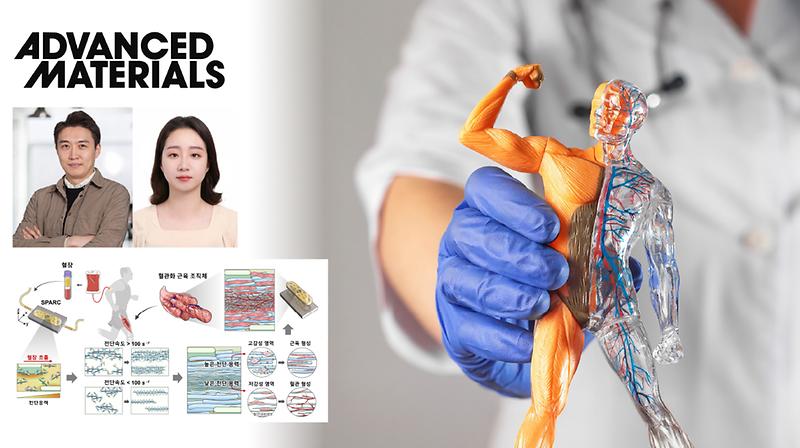
Novel Blood-Based Graft Enables Simultaneous Muscle and Blood Vessel RegenerationPublished in April 2026 issue of Advanced Materials, this breakthrough platform uses patient’s own blood to treat severe muscle injuries.Abstract Volumetric muscle loss (VML), a severe injury involving irreversible loss of both muscle tissue and vasculature, poses a major barrier to the development of clinically viable muscle grafts. Functional restoration requires engineered constructs capable of reconstructing both contractile and vascular components that can functionally integrate with the host vasculature. Here, we introduce SPARC (spatio-chimeric, plasma-based, anisotropic, and shear-responsive construct), a mechanically bimodal fibrin hydrogel engineered via shear-guided assembly of plasma fibrin to recreate the structural and mechanical heterogeneity of native muscle. Controlled microfluidic shear generates aligned fibrillar bundles and a spatially graded bimodal stiffness architecture, establishing stiff, bundle-dense regions that favor myogenic differentiation and compliant regions that promote endothelial morphogenesis. When co-cultured with myoblasts and endothelial cells, the resulting anisotropic matrix directs spatially organized myogenic maturation and endothelial morphogenesis. In vivo evaluation in a murine VML model shows that vascularized muscle SPARC grafts restore muscle architecture and function, promoting neovascularization, myofiber regeneration, and enhanced motor recovery. Through its spatially mechano-programmed design, SPARC enables coordinated myogenic and endothelial organization within a single construct, establishing a scalable biofabrication strategy for functional repair of extensive muscle defects. A research team, affiliated with UNIST has reported a new tissue engineering approach that regenerates muscle and blood vessels at the same time, using only the patient's blood. This technology offers a promising solution for treating extensive muscle loss caused by trauma or surgery. Led by Professor Joo H. Kang of the Department of Biomedical Engineering at UNIST, the team collaborated with Professor Yoonhee Jin from Yonsei University to create a platform called SPARC (spatio-chimeric, plasma-based, shear-responsive construct). Using microfluidics, they assemble fibrin—an essential protein involved in blood clotting—into a structured scaffold. By applying controlled shear stress within tiny channels, they align fibrin fibers in specific patterns. Dense, stiff regions support muscle cell growth, while softer areas promote blood vessel formation. The result is a single, integrated scaffold that guides both tissues to develop side by side. In tests on mice with large muscle wounds, the grafts successfully connected with the host's blood supply, encouraging the formation of new vasculature and muscle tissue. The animals regained strength and mobility, demonstrating the therapy's potential to restore function. This approach is notable because it uses fibrin derived solely from the patient's blood, reducing the risk of immune rejection. It also simplifies scaffold fabrication by leveraging physical forces to create distinct microenvironments within one material. “We harness fibrin's natural ability to organize under mechanical shear, creating a multifunctional scaffold from a single, biocompatible material,” said Professor Kang. “This technology could revolutionize treatments for severe muscle injuries and tissue defects.” The findings of this research were published in the online edition of Advanced Materials on April 22, 2026. The study was supported by the Ministry of Science and ICT (MSIT) and the National Research Foundation of Korea (NRF). Journal Reference Su Hyun Jung, Minjun Kim, Da-Yoon Kim, et al., “Mechanically Spatio-Chimeric Fibrin Assembly Enables Vascular-Integrated Muscle Reconstruction for Volumetric Muscle Loss Repair,” Adv. Mater., (2026).- 2026-05-28
- JooHyeon Heo
- 272
-
Research
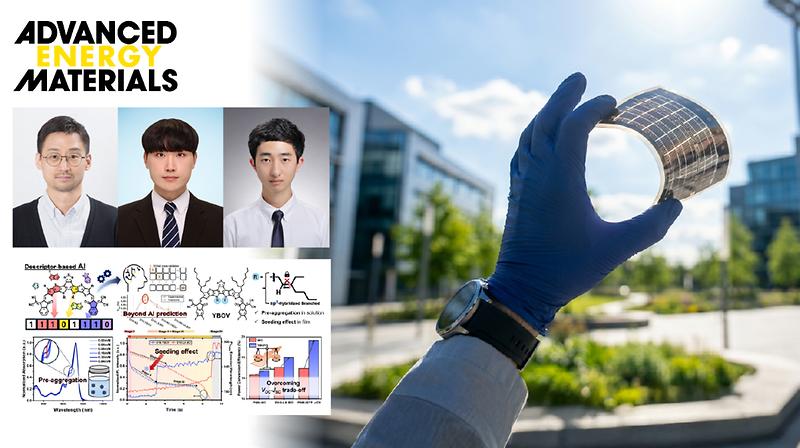
New Research Reveals High-Performance Organic Solar Cells Surpassing AI PredictionsPublished in the April 2026 issue of Adv. Energy Mater., the study achieves 19.67% PEC with eco-friendly manufacturing.Abstract Descriptor-based artificial intelligence (AI) has emerged as a paradigm for molecular design in organic solar cells (OSCs); However, it inherently overlooks collective effects governed by bond hybridization, intermolecular coupling, and aggregation thermodynamics. Such effects are encoded at the solution stage, where pre-aggregation of photoactive materials dictates nucleation pathways, phase separation, and molecular ordering during film formation. Herein, we introduce a YBOV non-fullerene acceptor featuring sp2-hybridized branched side chains that exhibit an unprecedentedly strong solution-state pre-aggregation propensity. This behavior translates into highly ordered solid films with a densely packed crystalline microstructure, enabled by a thermodynamically stabilized core–terminal dimer. As a result, incorporation of YBOV into OSCs not only outperforms the benchmark L8-BO-based device, but also confers an effective nucleation seeding-agent function across diverse host OSC platforms, delivering efficiencies of up to 19.67% via green-solvent processing by alleviating the intrinsic current–voltage trade-off. Machine-learning predictions largely match experimental photovoltaic parameters with a slight upward bias, except for open-circuit voltage, which exhibits anomalous behavior driven by pre-aggregation–driven seeding effects beyond descriptor-based AI. This work establishes sp2-hybridized branched side chains as a new molecular design principle, introducing pre-aggregation-enabled seeding effects beyond AI prediction and providing a universal strategy for high-performance OSCs. Researchers from UNIST and Sungkyunkwan University have created a new type of organic solar cell (OSC) that outperforms existing predictions and highlights a hidden factor in device performance. The secret lies in how molecules clump together in solution—a phenomenon that traditional AI models overlook. Professor Changduk Yang from the School of Energy and Chemical Engineering, in collaboration with Professor Doo-Hyun Ko from Sungkyunkwan University, reported a new OSC with a power conversion efficiency (PEC) of 19.67% through a clean, environmentally friendly process. OSCs are lightweight, flexible, and capable of covering large surfaces. They can be integrated into building facades, windows, and wearable devices. The manufacturing process involves dissolving organic materials in solvents and coating them onto substrates—an approach that's simple and scalable. The researchers designed a new molecule, named YBOV, with branched side chains that promote strong pre-aggregation in solution. This aggregation acts like a seed during film formation, guiding molecules to pack more orderly. The result is a crystalline, densely packed active layer that improves charge flow and boosts efficiency. Notably, devices made with YBOV achieved high performance even when produced with eco-friendly ortho-xylene solvent, avoiding toxic chlorinated options. YBOV also proved versatile. When added to different donor materials or used as an acceptor in various blends, it consistently increased device efficiency. Its aggregation behavior enhances performance across a range of formulations. However, this clustering effect escapes prediction by standard AI models. When trained on 750 device measurements, the models underestimated the open-circuit voltage for YBOV-based cells. This shows that AI, which predicts based on molecular structure alone, cannot fully capture the collective behaviors that influence real-world performance. “Our work introduces a new design principle,” said the research team. “It considers how molecules behave in solution—something AI cannot currently predict. Combining this insight with eco-friendly processing opens new paths for commercializing high-performance, sustainable organic solar cells.” Supported by the National Research Foundation of Korea (NRF) and the InnoCore program of the Ministry of Science and ICT (MSIT), the study involved Seokhwan Jeong, Donghoo Won, and Zhe Sun from UNIST who contributed equally. The findings of this research were published in Advanced Energy Materials on April 20, 2026. Journal Reference Seokhwan Jeong, Donghoo Won, Zhe Sun, et al ., “Beyond Descriptor-Based AI Design: Sp2-Hybridized Branched Side Chains Enable Pre-Aggregation–Driven Seeding Effects in Green-Solvent-Processed Organic Solar Cells,” Adv. Energy Mater., (2026).- 2026-05-27
- JooHyeon Heo
- 437
-
Research
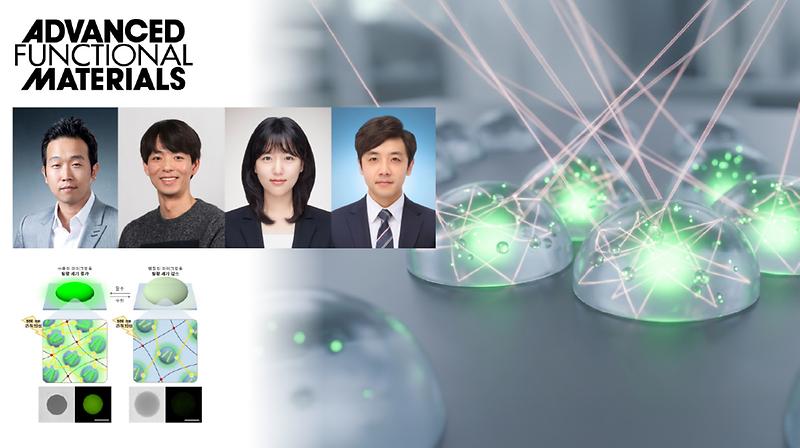
New Study Unveils Water-Responsive Luminescent MaterialThe findings of this research have been published in Advanced Functional Materials on April 20, 2026.Abstract Hydrogel-based photonic systems integrating luminescent emitters offer promise as soft, reconfigurable optical platforms, yet most designs lack internal optical engineering to control light propagation and confinement. Here, we present a lithographically programmable soft-photonic platform in which upconversion nanocrystals (UCNs) encapsulated within fluorocarbon nanoemulsion droplets are embedded in a poly(ethylene glycol) diacrylate (PEGDA) hydrogel microdome. Upon drying, strong refractive index contrast between the PEGDA matrix and fluorocarbon droplets creates a cooperative optical microenvironment that structures the near-infrared (NIR) excitation beam into a speckle-like field with localized hot spots while extending the photon dwell time within the microdome via internal reflection-based waveguiding. These effects yield a fully reversible, greater than sevenfold enhancement of upconversion luminescence—well beyond simple concentration or mechanical densification. This optical gain originates from multiple-scattering-assisted speckle excitation activated only in the contracted microdome state. Because UCNs are pumped by invisible NIR speckle illumination that rapidly varies in 3D across the microdome height, the incoherent sum of the photoluminescence manifests as a homogeneous filter-free visible brightness increase. The hydrogel microdomes, fabricated via a customized digital micromirror device (DMD)-based microlithography, enable high-resolution patterning of moisture-responsive displays, multicolor emission motifs, and reversible QR-code encryption, establishing a scalable route toward speckle-engineered soft photonic systems.' Researchers at UNIST have created a new material that dims when it absorbs moisture. This innovation could lead to water-sensitive security features, humidity sensors, and environmental-reactive displays. Led by Professor Jiseok Lee from the School of Energy and Chemical Engineering and Professor Jung-Hoon Park from the Department of Biomedical Engineering, the team developed a hydrogel with embedded upconversion nanocrystals (UCNs). When dry, the material glows more than seven times brighter than when wet. The core design involves oil droplets trapped inside a hydrogel dome. When near-infrared (NIR) light hits the nanocrystals, they emit visible light. In this structure, scattering within the oil droplets traps the light, boosting brightness. When the hydrogel absorbs water, its internal scattering drops, and the glow fades. The team demonstrated how this material can hide and reveal information. In one test, a hidden pattern beneath the hydrogel becomes visible only when water is applied, as the glow weakens. They also created QR codes that are scannable when dry but vanish when wet, making them useful for anti-counterfeiting. Durability stood out. The material retained consistent brightness over 100 wet-dry cycles, with less than 4% variation. It responds rapidly—within 0.1 seconds—fading visibly in seconds after contact with water. Lead author Chaeyeong Ryu said, “We improved brightness by designing the light pathways inside the hydrogel, without changing the nanocrystals. This makes the material ideal for moisture-triggered devices.” Professor Lee added, “The ability to program the color and pattern of the hydrogel microdome, combined with simple manufacturing, opens new paths for security, sensors, and displays across industries.” The findings of this research have been published in Advanced Functional Materials on April 20, 2026. This work was supported by the National Research Foundation of Korea (NRF) and the Ministry of Science and ICT (MSIT). Journal Reference Chaeyeong Ryu, Byungcheon Yoo, Seunghun Lee, et al ., “Speckle-Engineered Upconversion Amplification in Nanoemulsion-Templated Hydrogel Microdomes,” Adv. Funct. Mater. , (2026).- 2026-05-26
- JooHyeon Heo
- 307
-
Research
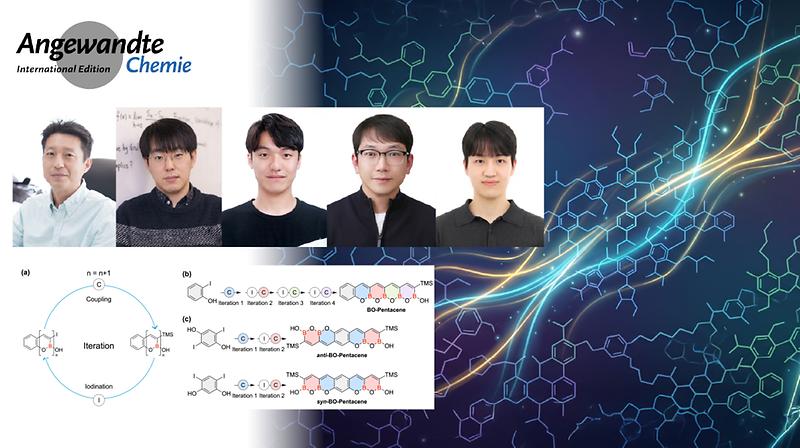
Researchers Find New Way to Rebuild Organic Semiconductor BackbonesThe study was published online in Angewandte Chemie International Edition on April 16, 2026.Abstract Iterative syntheses—repeating sequences of the same reactions to construct complex molecules—can facilitate the synthesis of specific classes of small molecules with structural redundancies, including acenes. Despite the prevalence of zigzag edges in the structures of acenes, few examples that effectively manipulate the edge configurations of acenes exist. In this study, the rationally designed iterative synthesis of three pentacene derivatives with continuous boron–oxygen bonds at the zigzag edges is reported. The simple and efficient two-step iteration employed ipso iodination with a trimethylsilyl group as the directing group and Suzuki cross-coupling/condensation reactions. Because of the fundamental role of pentacene derivatives in a broad spectrum of electronic applications, these findings are valuable across a diverse range of chemical and physical disciplines. Researchers at UNIST have introduced a new, efficient way to alter the backbone of organic semiconductors, giving researchers finer control over the molecules used in flexible displays, sensors, solar cells, and other electronic devices. Led by Professors Young S. Park and Seung Kyu Min from the Department of Chemistry, the team created an iterative synthesis method that places boron–oxygen bonds along the edge of pentacene, a well-known organic semiconductor made of five fused benzene rings. Organic semiconductors are valued because they are light, flexible, and chemically tunable. Small changes in a molecule's length, shape, or atomic makeup can shift how it absorbs light, emits light, or transports charge. But chemists have usually tuned these materials by attaching groups to the outside of the molecule. Changing the carbon framework itself has remained much harder. The new method works inside that framework. It inserts oxygen and boron atoms into the pentacene backbone, reshaping the molecule rather than simply decorating its edges. Dr. Sunghwa Jung, the study's first author, said the process relies on a repeated two-step cycle. “Each cycle begins with iodination at a specific site, followed by ring closure using a boron reagent,” he said. “By repeating the sequence, we can build pentacene structures with consecutive boron–oxygen bonds along the molecular edge.” By carefully controlling these cycles, the team synthesized three different pentacene derivatives, each with distinct boron–oxygen arrangements. The molecules absorbed and emitted light at different wavelengths, showing that their optical properties could be tuned through structure. All three also showed fluorescence quantum yields above 0.70, a sign of efficient light emission. The results point to possible uses in light-emitting organic semiconductors, fluorescent sensors, and optoelectronic materials that require bright, efficient emission. “This work gives us a stepwise way to build new acene molecules with consecutive boron–oxygen bonds,” Professor Park said. “Because the process can control both molecular length and arrangement, it expands the structures available for organic semiconductor design.” The study was published online in Angewandte Chemie International Edition on April 16, 2026. It was supported by funding from the National Research Foundation of Korea (NRF) and the Ministry of Trade, Industry and Energy (MOTIE). Journal Reference Seonghwa Jeong, Si-In Kim, Jonghwan Lee, et al., “Iterative Synthesis of Pentacene Derivatives with Continuous Boron–Oxygen Bonds,” Angew. Chem. Int. Ed. , (2026).- 2026-05-25
- JooHyeon Heo
- 504
-
Research
Innovative Nanoscale Design Produces Stronger Signals When BentPublished in Science Advances, innovative nanoscale design produces stronger signals when bent, challenging conventional assumptions.Abstract Second-harmonic generation (SHG) in monolayer transition-metal dichalcogenides is highly sensitive to mechanical strain, often leading to signal suppression under deformation. Here, we demonstrate reconfigurable SHG in monolayer MoS2 integrated with plasmonic nanoslits, where localized plasmonic fields counteract strain-induced suppression. The plasmonic nanoslits induce strong spatially localized field enhancement, yielding an SHG enhancement of up to 8000, estimated by normalizing the signal to the illumination area, relative to MoS2 on unpatterned Au films. Applying 1.2% compressive strain increases the SHG intensity by approximately threefold relative to the unstrained state, demonstrating effective strain-enabled modulation. Upon mechanical bending, the SHG response is reversibly modulated and remains stable after an initial preconditioning regime, retaining more than 95% of its initial intensity over repeated bending cycles. This strain-adaptive platform demonstrates robust cycling stability and provides a previously unexplored strategy for dynamically reconfigurable nonlinear metasurfaces, enabling applications in wearable sensors, tunable modulators, and compact frequency converters. A collaborative team from UNIST and Ajou University has unveiled a flexible optical device that generates a stronger light signal when bent. This achievement defies the traditional understanding that mechanical deformation diminishes optical performance, paving the way for advanced wearable sensors and flexible photonic systems. Led by Professors Hyeong-Ryeol Park and Seon Namgung of UNIST Department of Physics, alongside Professor Young-Hwan Ahn at Ajou University, the team engineered a device capable of converting incident light into a shorter wavelength. Unlike conventional devices that depend on bulky, thick materials, this ultra-thin structure employs molybdenum disulfide (MoS2), a two-dimensional semiconductor only a few atoms thick. While bending MoS2 typically weakens its optical signals, the researchers redesigned the architecture to focus electromagnetic energy within nanoscale gaps—merely 20 nanometers wide—that concentrate fields during compression. When bent inward, these gaps are narrow, amplifying the emitted light. On the other hand, when relaxed, they widen, diminishing the signal. This dynamic modulation renders the device both strain-sensitive and capable of real-time optical control. Experimental results demonstrated that compressing the device by approximately 1.2% increased its second-harmonic output—converting 800 nm light to 400 nm—by nearly threefold. Within these nanoscale gaps, the local electromagnetic field exceeds 8,000 times that of a flat MoS₂ film on gold. Notably, the device maintained over 95% of its initial performance even after 190 bending cycles, with minimal material degradation. “This nanoscale design not only enhances the optical signal but also provides inherent protection for the material,” said lead researcher Sobhagyam Sharma from UNIST. “It offers a straightforward approach to developing flexible sensors that respond to mechanical stress through changes in light emission.” Professor Park added, “This innovation lays the groundwork for deformation sensors that operate via optical signals and offers new insights into strain effects on two-dimensional materials.” The findings were published in Science Advances on May 8, supported by the National Research Foundation of Korea (NRF), the Institute for Information & Communications Technology Planning & Evaluation (IITP), and UNIST. Journal Reference Sobhagyam Sharma, Satyabrat Behera, Byung Hee Son, et al ., “Reconfigurable second-harmonic generation via plasmonic nanoslits counteracting strain-induced suppression in monolayer MoS2,” Sci. Adv., (2026).- 2026-05-22
- JooHyeon Heo
- 708
-
Research
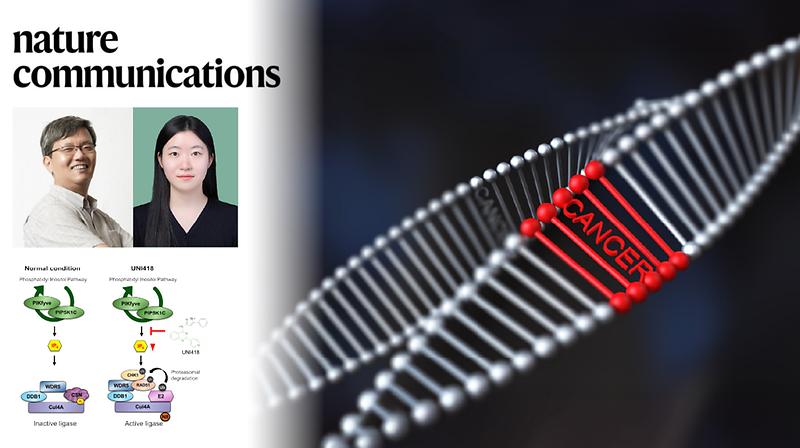
Scientists Discover a New Way to Make Drug-Resistant Cancer Treatable AgainDestabilizing DNA repair proteins restores tumor sensitivity to PARP inhibitor therapy.Cancer cells survive by repairing damage to their DNA—even damage that would normally be fatal. One of their most important defense systems is homologous recombination, a high-precision repair pathway that fixes broken DNA using key proteins such as RAD51 and CHK1. While therapies such as PARP inhibitors have successfully targeted this vulnerability, many tumors eventually regain their DNA repair ability and become resistant to treatment. A research team, led by Distinguished Professor Kyungjae Myung of the Department of Biomedical Engineering and Director of the Center for Genomic Integrity (CGI) within the Institute for Basic Science (IBS) at UNIST, in collaboration with Joo-Yong Lee from Chungnam National University, has now uncovered a new strategy to overcome this resistance. Their findings show that cancer cells can be made vulnerable again—not by altering genetic mutations, but by destabilizing the DNA repair machinery itself. In cells, DNA repair proteins are not static. Their levels are tightly regulated to maintain a balance between repair and genome stability. However, the researchers found that this balance can be deliberately disrupted. Through a cell-based screening approach designed to identify modulators of replication stress responses, the team discovered a small molecule, called UNI418. When applied to cancer cells, UNI418 caused a significant reduction in key DNA repair proteins, including RAD51 and CHK1. As these proteins were depleted, the cells lost their ability to efficiently repair DNA damage. To understand how this happens, the researchers examined how these proteins are controlled. They found that UNI418 activates a protein degradation system known as the Cul4A ubiquitin ligase complex, which tags specific proteins for destruction. This effectively dismantles the DNA repair system from within. Co-corresponding author Professor Joo-Yong Lee stated, "We identified a mechanism in which key DNA repair proteins are actively degraded inside the cell. This provides a new way to regulate homologous recombination beyond genetic mutations." The team further traced how this degradation pathway is triggered. UNI418 disrupts a signaling pathway involved in inositol phosphate metabolism, reducing the levels of a molecule called IP6. Under normal conditions, IP6 suppresses Cul4A activity. When IP6 levels drop, this suppression is lifted, allowing the degradation system to become active. As a result, Cul4A—together with its adapter protein WDR5—targets DNA repair proteins such as RAD51 for degradation, effectively shutting down homologous recombination. Functionally, this creates a state similar to DNA repair deficiency, even in cancer cells that had previously restored their repair capacity. This finding is particularly important for overcoming resistance to PARP inhibitors, one of the major challenges in current cancer therapy. The researchers tested whether this approach could improve treatment outcomes. In multiple cell-based experiments, UNI418 significantly increased the sensitivity of cancer cells to PARP inhibitors. Notably, it was also effective in PARP inhibitor-resistant cancer cells, restoring their responsiveness to treatment. Co-corresponding author Director Myung added, “By weakening the DNA repair system, we can re-sensitize tumors that have become resistant to existing therapies. This suggests a new strategy for expanding the effectiveness of PARP inhibitors.” The team further validated these findings in animal models. In tumor xenograft experiments, UNI418 suppressed tumor growth, particularly when combined with the PARP inhibitor Olaparib. Importantly, this effect was observed even in models that mimic treatment-resistant cancers. These results indicate that cancer cells remain dependent on DNA repair systems even after developing resistance—and that disrupting protein stability can expose this vulnerability. Beyond its therapeutic implications, the study also reveals a new biological connection between cellular metabolism and DNA repair. By linking IP6 signaling to the Cul4A-mediated protein degradation pathway, the work uncovers a previously unrecognized mechanism regulating genome stability. Co-corresponding author Director Myung remarked, "This study demonstrates that controlling the stability of DNA repair proteins can directly impact cancer cell survival. It also highlights a new therapeutic direction for overcoming drug resistance." Ultimately, the findings suggest that drug-resistant cancers can be made vulnerable again—not by changing their genes, but by dismantling the systems they rely on to repair DNA. Although UNI418 itself will require further development, the mechanism identified in this study provides a promising foundation for next-generation combination therapies. The findings of this research have been published in Nature Communications on April 4, 2026. Kyungjae Myung Distinguished Professor, Department of Biomedical Engineering, UNIST Director, IBS Center for Genomic Integrity (CGI) E: kmyung@ibs.re.kr William I. Suh IBS Public Relations Team E: willisuh@ibs.re.kr Story Source Materials provided by the Institute of Basic Science . Journal Reference Seon-gyeong Lee, Yuri Seo, Seula Jeong, et al., "Targeting IP6 signaling to destabilize homologous recombination proteins to overcome PARP inhibitor resistance," Nat. Commun., (2026). DOI: 10.1038/s41467-026-71421-z- 2026-05-21
- JooHyeon Heo
- 612
-
Research
New Study Uncovers Current-Driven Spin Polarization in Chiral NanowiresThe findings of this research were published in ACS Nano on April 23, 2026.Abstract The spin dynamics of electrons in chiral molecular systems remains a topic of intense interest, particularly regarding whether geometric chirality inherently induces spin polarization in current-carrying electrons. In this work, we employ ab initio real-time time-dependent density functional theory (rt-TDDFT) to directly simulate the interplay among charge current, spin, and orbital. This real-time tracking extends beyond perturbative treatments, and we analyze how nonequilibrium currents effectively lift the symmetry constraints of screw rotation and time-reversal symmetry. We find that the emergence of spin and orbital angular momenta is dynamically correlated with a concomitant loss of translational (linear) momentum, which we interpret as an intrinsic consequence of current-driven symmetry lowering. The implications of this mechanism for chirality-induced spin selectivity and spintronics device design are discussed. A new theoretical study shows that simply passing an electric current through chiral, helical materials can generate the intrinsic spin of electrons. Using real-time quantum calculations, researchers tracked how electron motion transforms into spin and orbital angular momentum. Led by Professor Noejung Park from the Department of Physics at UNIST, the team partnered with scientists from the University of Missouri, Pennsylvania State University, and the Max Planck Institute. They simulated electrons flowing through a one-dimensional helical conductor—specifically selenium nanowires—and uncovered the microscopic process behind spin polarization. Electrons carry two types of angular momentum: spin and orbital. Under normal conditions, these cancel out. But in chiral structures, an electric current favors electrons with a specific spin, creating a phenomenon known as chirality-induced spin selectivity (CISS). This effect enables spin control without magnetic fields, promising for spintronic devices. Yet, how current drives this spin polarization remained unclear. The simulations revealed that as electrons move along the helix, their linear momentum converts into orbital angular momentum. This transfer, driven by the current, couples with the electron’s spin via quantum spin-orbit interaction, leading to a net spin polarization. Notably, this process activates only above a certain current threshold and persists even after the electric field is turned off. Professor Park explains, “Our work shows that the flow of current itself creates and sustains spin polarization in chiral conductors. It highlights a fundamental mechanism—orbital angular momentum transfer—that can be harnessed for next-generation spintronic devices operating purely on electrical signals.” The findings were published in ACS Nano on April 23, 2026. The study has been supported by the National Research Foundation of Korea (NRF) grants funded by the Ministry of Science and ICT (MSIT), and by a KIAT grant funded by the Ministry of Trade, Industry, and Energy (MOTIE). Journal Reference Uiseok Jeong, Daniel Hill, Esmaeil Taghizadeh Sisakht, et al., "Current-Driven Symmetry Breaking and Spin–Orbit Polarization in Chiral Wires," ACS Nano, (2026).- 2026-05-21
- JooHyeon Heo
- 512